
Wedding Reception Lighting: How to Help Your Photos and Video Look Their Best
Lighting shapes the way your reception feels in person and the way it appears in photographs and film. Thoughtful wedding reception lighting can make a ballroom feel intimate, highlight the details you spent months choosing, and give important moments a clear place in the room. You do not need to design a technical lighting plan yourself. The most useful approach is to coordinate the venue, entertainment team, planner, photographer, and videographer so everyone understands the atmosphere you want and the moments that matter most.

Why wedding reception lighting deserves early attention
A reception often changes from bright cocktail-hour light to a darker dinner setting and then to colorful dance-floor lighting. Those transitions affect what guests see and what cameras record. Very dim rooms, strongly colored light, or bright fixtures aimed toward faces can change skin tones and hide expressions. That does not mean your reception must stay brightly lit. It means your creative and event teams should know how the room will change, when formal events will happen, and which lighting controls are available.

Start with the room before adding decorative light
Ask the venue what the room looks like during an actual evening reception, not only during a daytime tour. Find out which ceiling fixtures can be dimmed, whether separate areas have independent controls, and who is authorized to make changes. Notice dark corners, low ceilings, reflective walls, and windows that may look very different after sunset. If possible, share room photos or a venue walkthrough with your photographer and videographer. A clear picture of the existing environment helps everyone plan around the venue instead of guessing.

Choose uplighting colors with people in mind
Uplighting can transform plain walls and reinforce your color palette, but the color does not need to cover every face in the room. Warm white, amber, or softly tinted light can create atmosphere while keeping skin tones recognizable. Saturated blue, green, magenta, or red may work beautifully as accents or during open dancing, especially when the color can change throughout the evening. Ask the lighting provider whether wall lighting and dance-floor effects can be controlled separately so formal moments are not limited to one intense color.
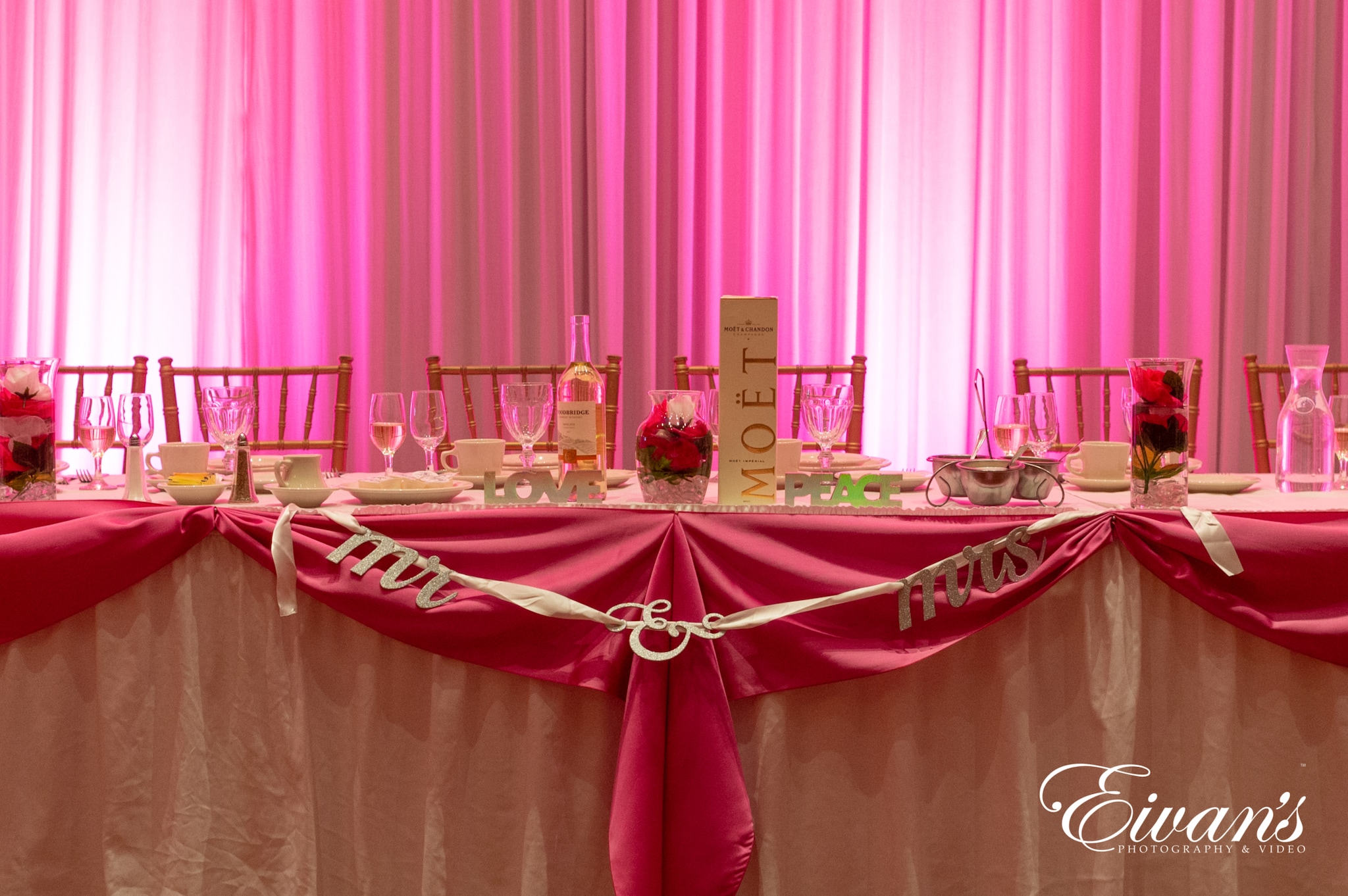
Keep enough soft light during dinner
Dinner does not need to feel like a brightly lit conference room, but guests should be able to see one another and the details on the tables. Candles and pin spots can add warmth, while a low level of soft room light helps preserve expressions during conversations and candid photographs. If servers, speeches, or table visits will happen during dinner, avoid turning the room nearly black. Your photographer can use professional lighting when needed, but a comfortable baseline gives the reception a more consistent atmosphere for both guests and video.

Give the first dance a defined pool of light
The first dance is easier to experience and document when the couple is visually separated from the rest of the room. Ask the DJ, venue, or lighting team whether a soft spotlight or controlled wash can follow the dance area without becoming harsh. Confirm where you will enter, where you plan to begin dancing, and whether guests will stand around the floor. If the first dance happens immediately after the grand entrance, the lighting team should know the transition in advance rather than adjusting after the song has started.

Plan parent dances and special traditions too
Parent dances, cultural dances, blessings, and surprise performances may use different parts of the room. Tell your photography and video teams where each tradition will begin and whether participants will move through the guests. Keep a similar level of flattering light for all scheduled dances, even if the dance floor becomes more colorful later. If several traditions occur back to back, include them in the wedding reception timeline so the event team can make smooth lighting and music transitions.

Light the people giving toasts
A beautifully lit head table does not automatically mean the person speaking will be easy to see. Decide where toasts will be delivered and ask speakers to remain in that area instead of walking into an unlit aisle. A lectern, marked standing position, or space beside the couple can give everyone a clear focal point. Coordinate the microphone and light placement so speakers are not facing directly into a bright fixture. Share the toast order with the photo and video teams, especially if any speech is intended as a surprise.

Make the cake cutting easy to see
The cake may look beautiful in a softly lit corner, but the cutting becomes difficult to photograph if the couple stands in shadow. Before guests gather, confirm which side of the cake offers enough room for both of you and your creative team. Keep distracting service items away from the background when possible, and ask the venue not to switch off nearby lights too early. If the cake display has its own pin spot, make sure it illuminates the couple as well as the cake during the formal moment.

Let the dance floor become more expressive
Once the formal events are complete, the lighting can become bolder. Moving lights, color changes, and darker surroundings can give the dance floor energy and create dramatic photographs and video. Ask the entertainment team whether effects can remain focused on the dance area instead of sweeping across dinner tables all evening. Fast strobes or lasers may not suit every crowd, venue, or camera setup, so tell your vendors about any concerns. The goal is a lively atmosphere that still allows the people on the floor to remain part of the story.

Discuss candles, string lights, and special effects
Candles, café lights, sparklers, cold sparks, and other decorative effects can add depth and movement, but each option comes with venue rules and timing considerations. Confirm what is permitted before booking or buying anything, and ask who will set up, operate, and remove it. For a sparkler exit or another nighttime effect, decide where guests will stand and when the photo and video teams should be ready. Never assume an effect can be added at the last minute simply because it appeared at another venue.

Share the lighting schedule with every key vendor
A short lighting schedule can prevent confusion. Note the expected look for guest arrival, grand entrance, first dance, dinner, toasts, cake cutting, open dancing, and the final exit. Include the name of the person who controls the venue lights and the contact for the DJ or lighting company. Your planner or coordinator can use the reception order of events to cue each change. Send the final version to your photographer and videographer before the wedding so they can plan positions and equipment.

Build a reception that feels good and photographs beautifully
The best wedding reception lighting plan supports the mood you want without pulling attention away from the celebration. Begin with the room, protect the visibility of faces during formal moments, and save the most dramatic effects for the dance floor or exit. You can also watch the Eivan’s wedding video portfolio to see how light, movement, and atmosphere work together on film. When you are ready, check your wedding-date availability or schedule a consultation to discuss photography and videography for your reception.
